Starting Over Is Terrifying. Here’s Why It Can Also Set You Free
There are moments in life when courage doesn’t arrive in some dramatic, movie-worthy way. More often it shows up quietly. It can feel uncertain, complicated, and honestly a little terrifying. Because stepping forward into the unknown is rarely comfortable. And sometimes the life we already know, even one filled with pain, can still feel easier than imagining something entirely different.
Part of this is simply how the brain works. Psychologists often explain that humans naturally prefer the familiar over the unknown because predictability signals safety to the brain. Even when a situation is unhealthy or deeply painful, it can still feel easier to stay with what we know than to step into a future we cannot yet see.
For Namratha Stanley, that crossroads arrived after more than a decade inside an abusive marriage.
Fear had shaped the landscape of her life for years, quietly shrinking what felt possible beyond it. Like many people living inside difficult circumstances, she did not stay because she lacked strength. She stayed because the life outside of the relationship felt impossible to picture clearly.
Then one night changed everything.
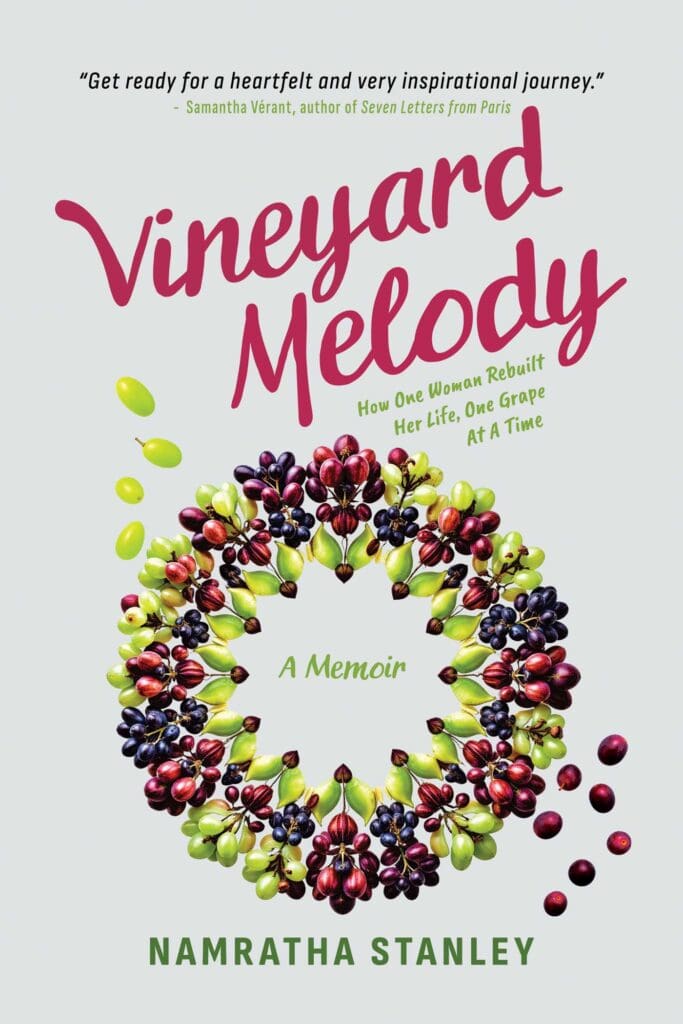
That moment, which she recounts in her memoir Vineyard Melody, forced a truth she could no longer soften or explain away. The abuse she had endured was no longer affecting only her. It was shaping her daughter’s world too. And in that realization, something inside her shifted.
“As mothers, we are instinctively wired to nurture, protect, and shield our children,” Stanley says. “The true shift for me came when I realised the abuse wasn’t only harming me, it was shaping my daughter’s world too. In that moment, everything changed. My role as her protector became louder than my fear.”
For years, she had been living in what psychologists often describe as survival mode, a state where the mind quietly minimizes pain just enough to keep moving forward. It is a response many people develop when circumstances feel overwhelming. Research on trauma and domestic abuse shows that people often cope by softening or reframing reality in order to maintain some sense of emotional stability.
But real change often begins with a moment of clarity, and that clarity usually starts with telling the truth about what is actually happening.
“Many people remain in difficult situations because fear clouds their sense of possibility,” Stanley explains. “When you can’t see what life might look like beyond the abuse, the unknown feels darker than what you already know. That uncertainty breeds deep insecurity.”
Once she stopped minimizing the severity of her reality, a different possibility slowly came into view. For Stanley, that moment became the beginning of everything that followed.
Leaving When the World Tells You to Stay
Leaving an abusive relationship is rarely only a personal decision. It often unfolds inside a complicated web of cultural expectations, social pressure, and long-standing beliefs about family, responsibility, and endurance.
Stanley encountered those pressures immediately.
“Our societies can be unforgiving,” she says. “I heard the same refrain again and again: you should have adjusted, you should have tried harder, you should have had more patience. Women are often told it’s their responsibility to keep the peace, to endure, to seek advice, to stay for the sake of the family. There were many doubts, many opinions, many voices suggesting that leaving meant failure.”
This dynamic has been widely documented in sociological research. In many cultures, women are still taught that strength means holding everything together no matter the cost. Endurance is praised more openly than the decision to walk away.
But Stanley also experienced something equally powerful.
Belief.
“But I also had my tribe, the people who believed me, protected me, and wanted something better for me and my daughter,” she says. “My parents, my sister, my brother-in-law, and my closest friends held me up when I felt fragile. They reminded me that no one wants to break a family, but abuse should never be mistaken for a healthy home.”
Support like this can be life-changing. Research on resilience consistently shows that even a small circle of trusted people can dramatically increase someone’s ability to make and sustain difficult life decisions.
Sometimes courage grows quietly in the presence of people who simply say they believe you.
Relearning How to Trust Yourself
Starting over rarely comes with guarantees. There is no certainty that the next step will work and no promise that the leap will land safely. For Stanley, rebuilding her life required rediscovering a voice she had spent years learning to ignore, which was her own.
“We all have an inner voice, but so often we drown it out, lost in chaos, fear of judgment, and the noise of expectations,” she says.
When she finally stepped away from the environment that had shaped her daily life for so long, something unexpected happened.
“Once I stepped away from that chaos, a sense of calm slowly returned. In that stillness, I could finally hear myself clearly,” she says. “I began to plan my life differently, with intention instead of fear. That quiet voice kept telling me, trust yourself, everything is going to be okay. And for the first time in my life, I believed it.”
Modern neuroscience helps explain why this happens. Chronic stress keeps the brain in a state of hypervigilance where the focus stays on immediate survival. When that stress begins to ease, the prefrontal cortex, which supports planning, reflection, and decision making, becomes more active again.
Sometimes clarity is not something we have to chase. Rather it is something that returns when the noise finally quiets.
The Quiet That Comes After Fear
For many people, leaving a harmful environment feels like stepping into chaos.
For Stanley, it felt like stepping into silence.
“Once I left, I didn’t question my decision because I knew I had done everything I possibly could to keep my family together,” she says. “I had tried, endured, adjusted, hoped while I gave one hundred percent of myself. And despite all of that, what remained was hatred and escalating violence.”
Moving away from that environment created a shift she had not experienced in years.
“The moment I stepped out, it felt as though I had walked out of a storm,” she says. “In the days that followed, there was a clarity I had never known before. There was peace, an unfamiliar hush. For twelve years, I had lived in a state of constant alertness, afraid inside my own home. Suddenly, that minute-to-minute fear was gone. And in that quiet, I could finally think about the future.”
Her journey reminds us that starting over is rarely about escaping the past. It is about choosing a future that finally feels like your own.
What We Can Learn From Namratha’s Story
Stories like Stanley’s remind us that starting over takes time and courage. And it unfolds through a series of quiet decisions made when the future still feels uncertain. Her journey offers a few lessons for anyone standing at their own crossroads.
Name the truth.
Real change often begins when we stop minimizing what is happening and face it honestly. When Stanley’s acknowledged the reality of her situation, she was finally able to think clearly about what needed to change.
Find your support system.
Courage grows when we feel believed. Stanley’s family and close friends reminded her that abuse should never be mistaken for a healthy home. Research shows that even a small circle of supportive relationships can significantly strengthen resilience and recovery.
Create space for your inner voice.
For years, fear and chaos drowned out Stanley’s intuition. Once she stepped away from that environment, she could finally hear herself clearly again. Moments of reflection or stillness can help us reconnect with that inner clarity.
Learn something that builds you.
Discovering the craft of wine helped Stanley rebuild confidence and independence. This as self-efficacy, the belief that your actions can shape your future, reminds us that we are capable of growth and change.
Starting over is a form of freedom.
Many cultures praise endurance and question change. But sometimes the most courageous decision is allowing yourself to imagine a different life. Starting over does not erase the past. It allows you to create a future that reflects who you are becoming.
Readers can explore the full journey in her memoir Vineyard Melody, where she shares the remarkable path from survival to reinvention. Pick up your copy today!