Ashley Oerman Is Saying the Thing So Many Women Feel Guilty Even Thinking
There are some relationships people will openly complain about without hesitation. Bad dates. Toxic bosses. Emotionally unavailable men with podcasts. Sure. But mothers? That conversation still makes people visibly uncomfortable. Because no matter how self-aware, emotionally evolved, or therapy-literate we’ve become, there’s still this underlying expectation that your relationship with your mom is supposed to feel loving. Safe. Supportive. Or at the very least…good enough to stop questioning.
And when it doesn’t? Most people learn to minimize it before they ever learn to talk about it. Ashley Oerman is done doing that.
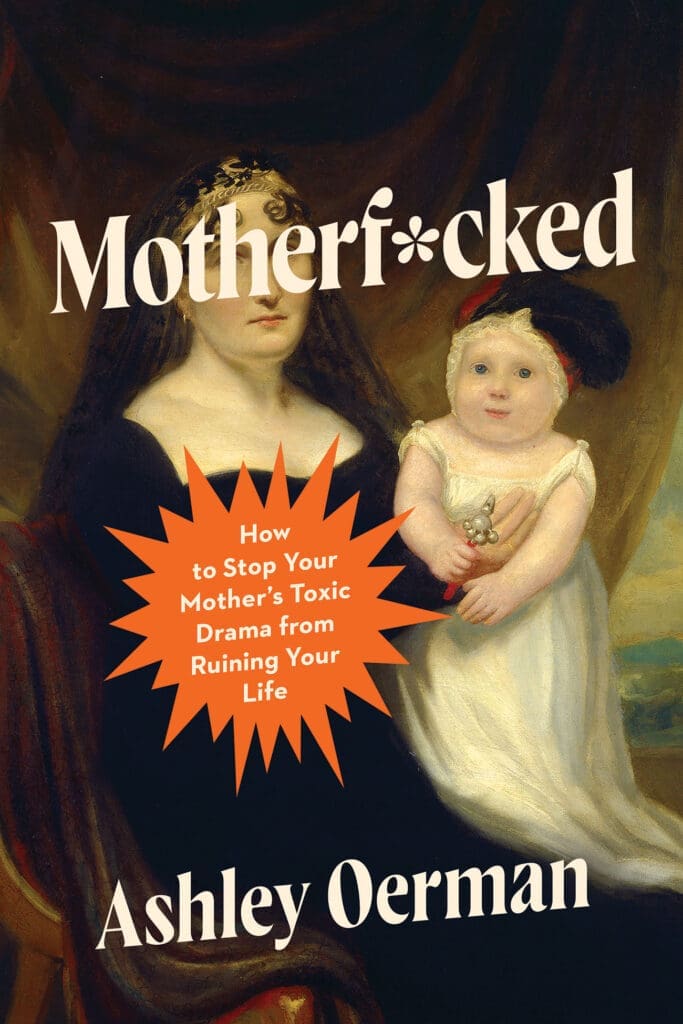
The deputy editor at Wondermind — the mental health platform founded by Selena Gomez and Mandy Teefey — has built a career around making emotional conversations feel less intimidating, less clinical, and way more honest. Now, with her debut book, Motherf*cked: How to Keep Your Mother’s Toxic Drama From Ruining Your Life, she’s taking on one of the most emotionally loaded relationships people can have.
And she’s not interested in softening the edges to make everyone else more comfortable.
The Title Alone Says What Most People Won’t
“The title of this book came before I fully knew what the book was. I knew I wanted to help people who had dysfunctional relationships with their moms, I knew I was allergic to earnestness (still am), and I knew that I could use my skills as a health and wellness journalist to get reliable tips and insights from the best experts and research. Beyond that, the format and whether I would even share personal stories were TBD.”
“The title of this book came before I fully knew what the book was. I knew I wanted to help people who had dysfunctional relationships with their moms, I knew I was allergic to earnestness (still am), and I knew that I could use my skills as a health and wellness journalist to get reliable tips and insights from the best experts and research. Beyond that, the format and whether I would even share personal stories were TBD.”
What emerged from that starting point is both deeply reported and deeply personal. It brings together lived experience, expert insight, and research in a way that feels grounded and credible without losing its edge.
“Motherf*cked is a self-help book for people who have dysfunctional relationships with their moms. It’s based on interviews with licensed therapists, grief and attachment theory research, and some of my own experiences.”
Honestly, the title works because it immediately cuts through the performance. No overly polished language. No pretending difficult mother-daughter dynamics are just “communication issues.” No wrapping emotional pain in inspirational Pinterest quotes. Ashley says the thing so many people secretly think but feel horrible admitting out loud.
“For most of my life, I felt a lot of shame around my relationship with my mom. I sincerely thought, until recently, I was the only one I knew whose mom didn’t make them feel good. Feeling bad about feeling bad kept me from doing anything about the problem. It took way too long to believe my feelings and address my issues with my mom.”
That layered experience, feeling hurt, then immediately judging yourself for feeling hurt, is what keeps so many people stuck. What Ashley has created with Motherf*cked feels less like someone giving advice from a pedestal and more like someone finally turning the lights on in a room people have been sitting in alone for years.
“Motherf*cked is a self-help book for people who have dysfunctional relationships with their moms. It’s based on interviews with licensed therapists, grief and attachment theory research, and some of my own experiences.”
The Real Problem Is How Easy It Is to Explain Away Your Own Hurt
One of the smartest things Ashley does throughout the book is move away from internet-diagnosis culture and back toward something much more honest: how the relationship actually makes you feel.
“Such a good question, and it’s one I get frequently. Based on my reporting, it’s less about the behavior itself (though I explain more about the difference between healthy, unhealthy, and abusive behaviors in the book) and more about how her actions make you feel.”
Because not every difficult relationship with a mother looks obviously toxic from the outside. Sometimes it looks completely normal to everyone else. Sometimes the conversations are frequent, the photos are smiling, the family still gathers for holidays, and nothing appears “bad enough” to question. But internally, someone is carrying the emotional weight of that relationship constantly, overthinking every interaction, feeling drained after every phone call, and quietly exhausting themselves trying to keep the peace.
“As someone who used to justify every weird or hurtful thing my mom did, I understand why it can seem easier to brush something off than to sit with the fact that it hurts you.”
That line hit hard because I think so many women have been conditioned to override themselves in order to protect other people’s comfort. Especially their mothers.
“One of the therapists I spoke to said noticing how much energy your mom takes from other parts of your life can help you decide if you need to shift the way you interact. For example, if you find that you think about your mom more often than not or you’re exhausted after spending time with or speaking to her, that could be an indication that something needs to change.”
TikTok Didn’t Invent Attachment Theory
Ashley also brings nuance back into conversations that social media tends to flatten into neat little labels.
“The first thing I’d say is that attachment theory is so much more complex than TikTok makes it out to be.”
Instead of turning people into diagnoses, Ashley explains attachment through lived emotional experience.
“In general, the way your mom treats you as a baby, within the first year of life-ish, can inform what you expect from other people as you get older. If your mom comes through on all of your baby requests — feeding you, holding you, changing you, snuggling you — you learn that you’re important, your needs matter, and people care about you. You may also learn that people are worthy of your trust because they come through for you when you need them.”
But what makes this conversation feel hopeful rather than fatalistic is that Ashley refuses to treat childhood experiences as permanent identity sentences.
“That said, even if your mom (or other primary caregiver) completely blew you off as a baby, your healthy relationships with other people — like friends, teachers, mentors, and babysitters — can undo the damage, so to speak. When it comes to romantic partnerships, your early relationship with your mom can influence how you show up, but the impact is pretty small.”
And then comes one of the more surprising insights in the book.
“This is one of my favorite fun facts: According to some research, your early attachment to your mom is most likely to influence your relationship with her as an adult. That’s why I have a little quiz in the book where you can determine your attachment style to your mom specifically. And that can change over time!”
The Guilt Is What Keeps So Many Women Stuck
If there’s one emotion woven through almost every complicated mother-daughter relationship, it’s guilt. The kind that makes people question themselves before they question the dynamic.
“Guilt comes from believing we’ve done something wrong. But — and maybe this is also obvious, though it wasn’t to me — we can feel guilty even if we didn’t do anything objectively terrible.”
For people who grew up emotionally accommodating a parent, prioritizing themselves can feel almost physically uncomfortable.
“For those who grew up accommodating their mom’s needs (or the needs of any primary caregiver), it can feel wrong to stop doing that — even if it’s for your own benefit.”
And beneath that is something even deeper: the fear of what will happen if the relationship changes.
“As kids, we do everything we can to maintain a tight relationship with our primary caregivers. After all, they keep us safe, clothed, fed, etc. As we grow up, that relationship should shift so you have freedom to prioritize your own needs, but moms and parents aren’t always down for that change.”
Why Boundaries Feel So Loaded
Setting boundaries with a parent isn’t just about communication. It’s about fear. Fear of disappointing them. Fear of conflict. Fear they’ll pull away completely.
“There are so many reasons why setting boundaries feels hard. It’s scary to tell someone how you want to be treated, especially a parent. When you do, you risk them saying, ‘Well, fuck it, I’m going to bail on this relationship if you want me to follow these instructions.’”
And despite everything, the need for connection doesn’t magically disappear.
“Attachment theory research suggests that we never stop needing or wanting our moms, even if our moms have treated us like garbage. I’ve interviewed more than 20 people about their mothers, and almost all of them would agree.”
That tension is what makes these relationships so emotionally confusing. Someone can hurt you deeply and still be someone you desperately want love from. Ashley’s advice is to stop trying to become fearless before setting boundaries. Instead, practice smaller ones first.
“The first thing is to get comfortable being uncomfortable. Try to set a boundary with someone you love and trust. Notice how it goes. I think you’ll find that this friend or family member doesn’t abandon you when you decline an invitation or say you’ll call them back later.”
That practice matters.
“Practicing boundaries with people you trust proves that it’s okay to set limits on your relationships. That can build your confidence as you work toward setting boundaries with someone you don’t fully trust…like your mom.”
Humor Is What Makes This Book Work
What makes Motherf*cked different from a lot of self-help books is that it doesn’t drown in heaviness. Ashley uses humor the way a lot of women actually use humor in real life — not to avoid pain, but to survive it.
“I think laughter helps break the ice. I hope that by naming this book something pretty irreverent, we can bust through the shame and get right into it. In Motherf*cked, I explain why these relationships matter, where they can go wrong, and how to start feeling better.”
And honestly, that balance is what makes the book land emotionally. It never feels overly clinical. It never feels emotionally performative. And it never slips into the kind of overly polished self-help language that makes people immediately shut down. Ashley said that while revisiting earlier drafts, she realized humor had sometimes become a shield.
“When I went back and started editing the first chapters, about nine months after I first wrote them, I saw how trying to be funny had become a crutch. The jokes were so distracting. It was endearing to read the old me talk about this topic in such a har-har way. She didn’t have to try so hard.”
That self-awareness is probably why the final version feels so grounded.
“Thankfully, by the time I was wrapping up my first draft, I found a natural balance between the serious and the silly…at least it feels balanced to me.”
“We Must Turn This Shit Into Gold”
When I asked Ashley what finally pushed her from editor to author, her answer felt incredibly revealing.
“This sounds so corny, and you know by now I hate corny, but I do feel like this book was always bigger than me. There was a moment when my therapist asked me, ‘What do you want to do with all of this?’ (‘all of this’ being the knowledge that this relationship with my mom does suck and it’s not changing). Immediately, my brain was like, ‘We must turn this shit into gold! Make it something that helps others.’”
And in a lot of ways, she did. Not because the book magically resolves painful family dynamics. It doesn’t pretend to. But because it gives language to experiences people have been quietly carrying for years, while simultaneously wondering if they were being dramatic.
And sometimes finally naming something honestly is the beginning of healing it.
GO BUY THIS BOOK
What Motherf*cked offers is not a perfect resolution. It offers something far more useful. So no matter what you situation is, there may be something in here for you. Now, go pick up this book wherever books are sold or you can just click right here and buy it now!