The Wellness Industry Missed This: Jennifer Walsh on Why We’re Actually Exhausted
Jennifer Walsh wants us to remember what it feels like to be a human. Long before wellness became an industry and before “nervous system regulation” turned into social media vocabulary (one that I am very happy did by the way), she was building experiences around how people feel (emotionally, physically, sensorially). First through beauty. Now, through nature, neuroscience, and what happens to the human brain when we spend too much time disconnected from both.
According to Jennifer, the modern wellness conversation is missing something massive: we keep trying to treat the symptoms without looking at the environment that creates them in the first place.
Building Human-Centered Experiences
Back in the late ‘90s, Jennifer changed the beauty industry by creating Beauty Bar, the first omni-channel beauty retailer in the United States. At a time when department store counters controlled beauty culture, she created something entirely different, an open-sell environment where customers could discover niche beauty and wellness brands in a way that felt approachable, experiential, and deeply personal.
Today that feels normal. Back then, it was disruptive.
Jennifer was introducing consumers to brands like Bobbi Brown, Philosophy, Kiehl’s, Fresh, Stila, Mario Badescu, and La Mer before most people had access to them outside of glossy magazine pages.
Ironically, it all began because someone handed her a microphone.
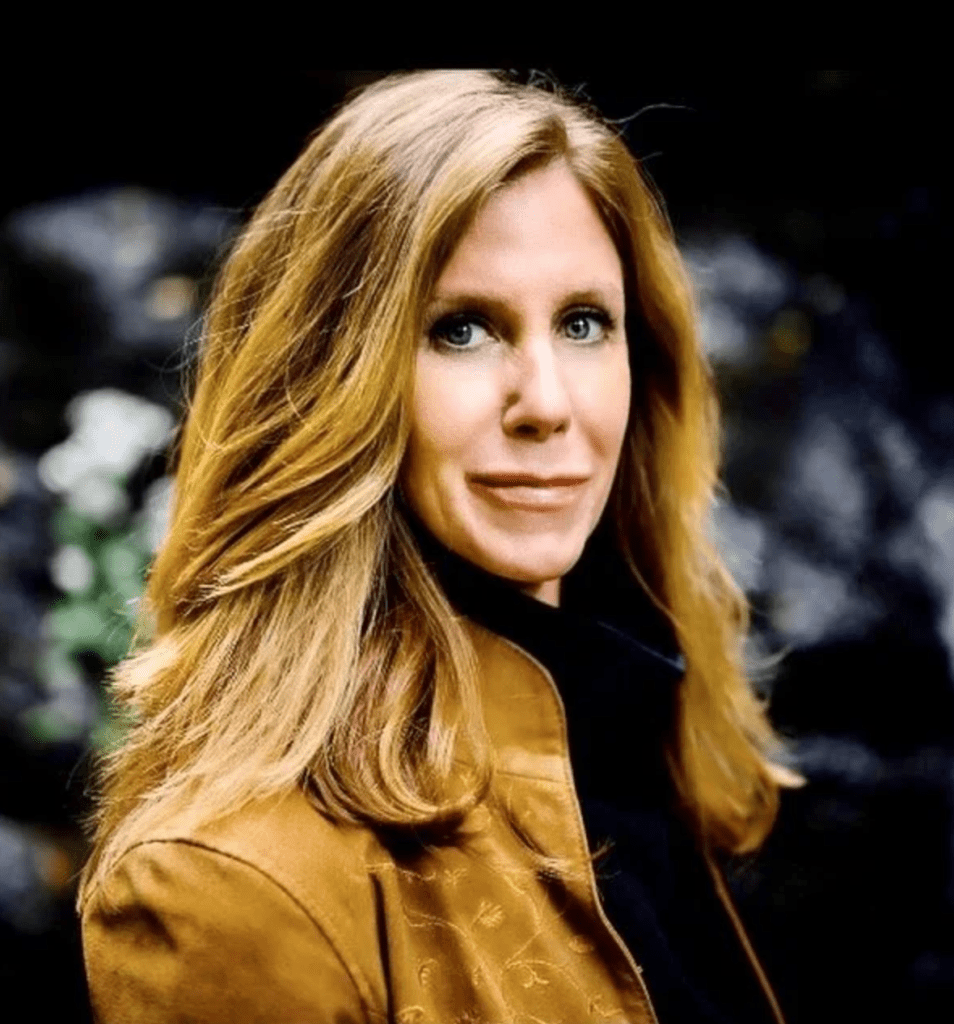
At the time, Jennifer was a sought-after celebrity makeup artist who had worked on many famous faces. A television producer asked her to simply talk about the products she was using on clients. One segment turned into another, then another, until she became a weekly on-air beauty expert educating viewers on products they couldn’t find anywhere.
That disconnect became the opportunity.
Beauty Bar quickly grew into a retail powerhouse before Jennifer sold the company in 2010. But underneath the success of beauty retail, media, and entrepreneurship, another curiosity had quietly been following her for years.
Nature.
Jennifer’s connection to nature wasn’t manufactured through wellness trends. It had always been there.
“While nature has been a continuous thread in my entire life from enjoying the outdoors from a very early age, to living in a tent for 36 years every summer, to my first business (Beauty Bar) and bringing so much indoors, it wasn’t until 2016 that I began studying the impact that nature has on our bodies and brains,” she says. “That was the moment I realized it was detrimental to our health.”
What Jennifer began uncovering through neuroscience research fundamentally shifted how she viewed human wellbeing.
“Most people say that nature is medicine but that is incorrect,” she explains. “It is our disconnection from nature that made us unwell.”
That distinction changes everything.
Because Jennifer doesn’t see burnout, overwhelm, anxiety, and exhaustion as isolated issues. She sees them as biological responses to environments humans were never designed to live inside of 24/7. “Our environments indoors and out can either feed us or deplete us,” she says. “Our bodies are magical antennas, receiving inputs from everything. Our brain ‘moves’ differently in enriched environments vs. impoverished ones and it is often subconscious.”
The Nervous System Has Been Trying to Get Our Attention
Jennifer believes most people miss the early signs of dysregulation because modern life has trained us to override them. “The top whisper I hear time and time again is exhaustion,” she says. “We were never meant to sit all day long attached to soulless boxes (our devices), they are not life giving, they do the exact opposite to the human body.”
And despite what hustle culture would like people to believe, the brain isn’t built for constant fragmentation.
“Our archaic brains can’t multitask no matter how much we tell ourselves they can, they actually can not,” she says. “We can do many things at once, but not well.”
Jennifer’s work through Wellness Walks®, corporate wellness consulting, and biophilic design focuses heavily on helping people reconnect with the rhythms their nervous systems are desperately asking for.
“If our nervous system could speak in full sentences,” she says, “it would be screaming less technology and more beauty, nature, art, which all lead to more human connection. This work/study is known as neuroaesthetics.”
Small Sensory Shifts Can Change Everything
One of the reasons Jennifer’s work resonates is that she doesn’t overcomplicate the solutions. She’s not talking about disappearing into the woods for a month (although she does live in the cutest tent in Ocean Grove’s Tent City in the summer, which I am very jealous of, more on that here) or living some perfectly optimized wellness lifestyle. She talks about practical, sensory shifts people can make immediately.

“There are so many small, simple things that people can feel immediately,” she says. “From more natural light exposure to infusing small doses of natural sounds like birdsong, blowing wind, and waves crashing into the shore.”
And the tools are already sitting inside most homes.
“All we need to do is use our youtube or alexa or google to implement these sounds indoors.”
The science supporting these ideas continues to grow. Research in neuroaesthetics and environmental psychology shows that exposure to natural sound, texture, light, and movement directly impacts mood, cognition, stress response, and nervous system regulation.
Jennifer simply wants people to stop treating those things as luxuries instead of biological needs.
Women Are Remembering Themselves Again
At the center of Jennifer’s work is something she calls Natural Intelligence — a framework rooted in embodied wisdom, intuition, presence, and reconnection. And according to Jennifer, the shift happens quickly once women understand what’s actually happening inside their brains and bodies.
“Once people are educated on what is happening behind the scenes of our brains when we are more in rhythm with nature vs. experiencing Nature Deficit Disorder, people almost immediately change their daily lives,” she says.
When she teaches the eight pillars of Natural Intelligence, she sees physical transformations almost immediately.
“There is nothing to be bought or added,” Jennifer says. “It is about remembering who we are truly and deeply.”
Then comes the shift.
“Shoulders go back, heads are held higher, women walk taller. It’s an exciting new awareness, a power, that is unearthed.”
Presence Is Becoming a Survival Skill
Jennifer believes one of the biggest losses of modern technology isn’t attention span. It’s intuition.
“Intuition and spatial awareness are superpowers in 2026,” she says. “So many people willingly give their brains away to technology.”
She sees it constantly walking through the city. People are physically present but mentally consumed by devices, disconnected from their bodies and surroundings.
“They have no idea what is happening around them because they are so fully integrated into their devices and have headsets on,” she says. “When you tune out your own body, apathy sets in. We begin to lose our ability to sense who we are / where we are.”
Leadership now looks less like hyper-productivity and more like human awareness. “If productivity were designed around the human nervous system instead of machines,” she says, “we would be creating with our hands, doing more with our bodies, and doing more in true rhythm with the natural world to help us move through the seasons more seamlessly.”
The Reset Is Simpler Than Most People Think
Jennifer’s advice for someone feeling overstimulated, overworked, and disconnected isn’t complicated.
“I always suggest going for a mid-day 10-minute walk,” she says. “Do an ART walk.”
ART stands for Attention Restoration Theory, a concept developed in the 1980s that explores how softly focusing on nature helps calm mental fatigue and cognitive overload.
“It is the opportunity to softly gaze at something in nature, whether it be a cloud, a leaf, or a bird, and just enjoy it,” she explains. “It helps our brain stop running on overdrive. We break the loop of overthinking and give ourselves a simple reset.”
And when Jennifer herself feels overwhelmed?
“I lace up my shoes and head out for a walk, no earbuds,” she says. “I just walk and notice and listen to the world around me.”
It’s Simple, honest and it’s entirely human. Which is really the entire point. Because when I ask Jennifer where someone should not begin if they feel disconnected from themselves, her answer lands harder than any wellness trend ever could. “Don’t start by looking outside of yourself,” she says. “Get to know you, in the quiet, in the peaceful moments.”
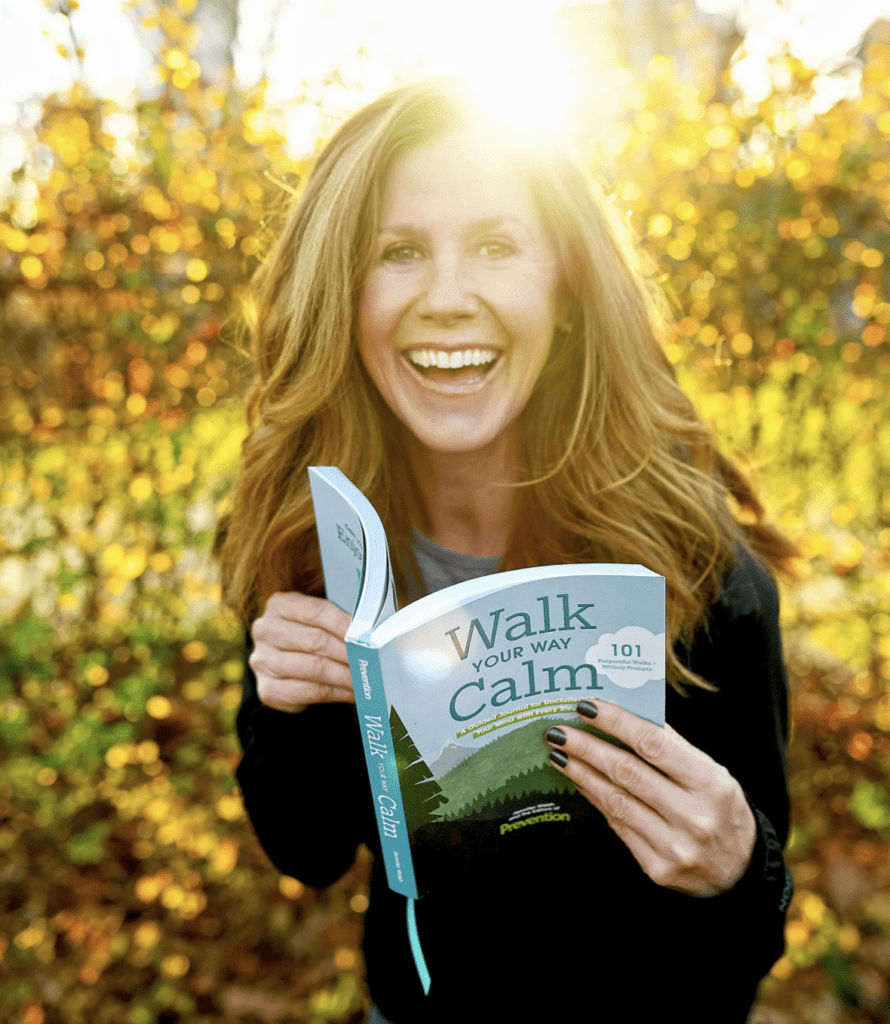
Pick up a copy of Jennifer Walsh’s book, Walk Your Way Calm. It’s the kind of book that makes you want to put your phone down and go outside immediately. Get your copy here.